
Women
Shoes
Use the chart to compare EU, UK, US sizes, and foot length in centimetres.
Women’s Shoes
| EU | UK | US | CM |
|---|---|---|---|
| 36 | 3 | 5 | 22 |
| 36.5 | 3.5 | 5.5 | 22.5 |
| 37 | 4 | 6 | 23 |
| 37.5 | 4.5 | 6.5 | 23.5 |
| 38 | 5 | 7 | 24 |
| 38.5 | 5.5 | 7.5 | 24.5 |
| 39 | 6 | 8 | 25 |
| 39.5 | 6.5 | 8.5 | 25.5 |
| 40 | 7 | 9 | 26 |
| 40.5 | 7.5 | 9.5 | 26.5 |
| 41 | 8 | 10 | 27 |
| 41.5 | 8.5 | 10.5 | 28 |
| 42 | 9 | 11 | 28.5 |
Synthetic Measurements
| Measurements | EU | UK | US | CM |
|---|---|---|---|---|
| XS | 36 - 38 | 3 - 5 | 5 - 7 | 22 - 24 |
| S | 39 - 41 | 6 - 8 | 8 - 10 | 25 - 27 |
| M | 42 | 9 | 11 | 28.5 |
How to Measure Yourself
How to take your measurements to choose the perfect size.
1
Step 1
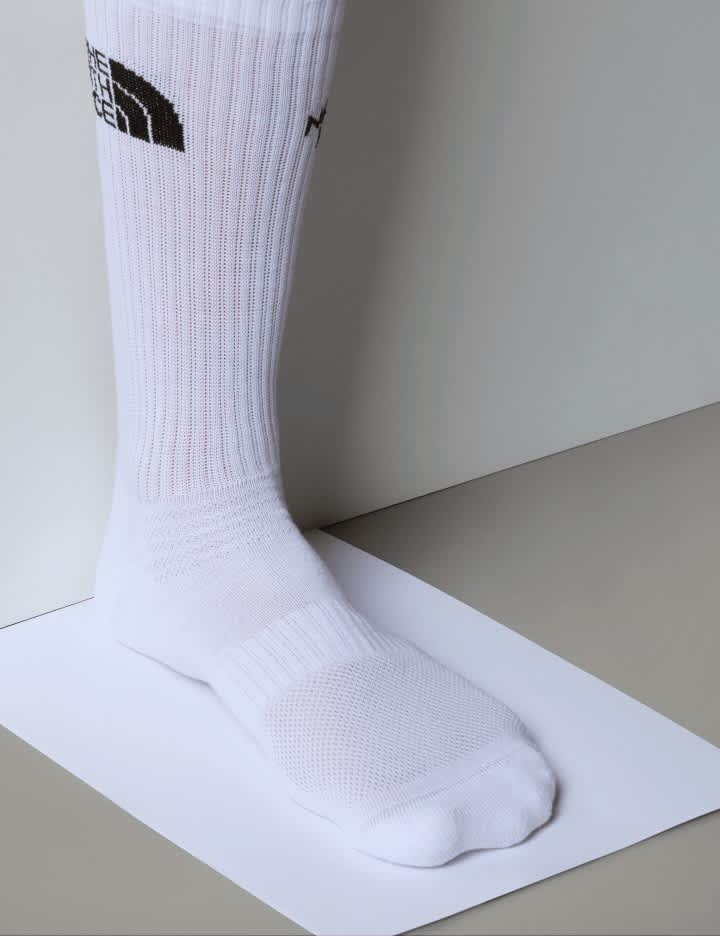
Use tape to secure a piece of paper to a hard, flat surface, ensuring it doesn't move.
2
Step 2
Place one foot on the paper and stand upright with your feet shoulder-width apart and parallel. Distribute your weight evenly.
3
Step 3
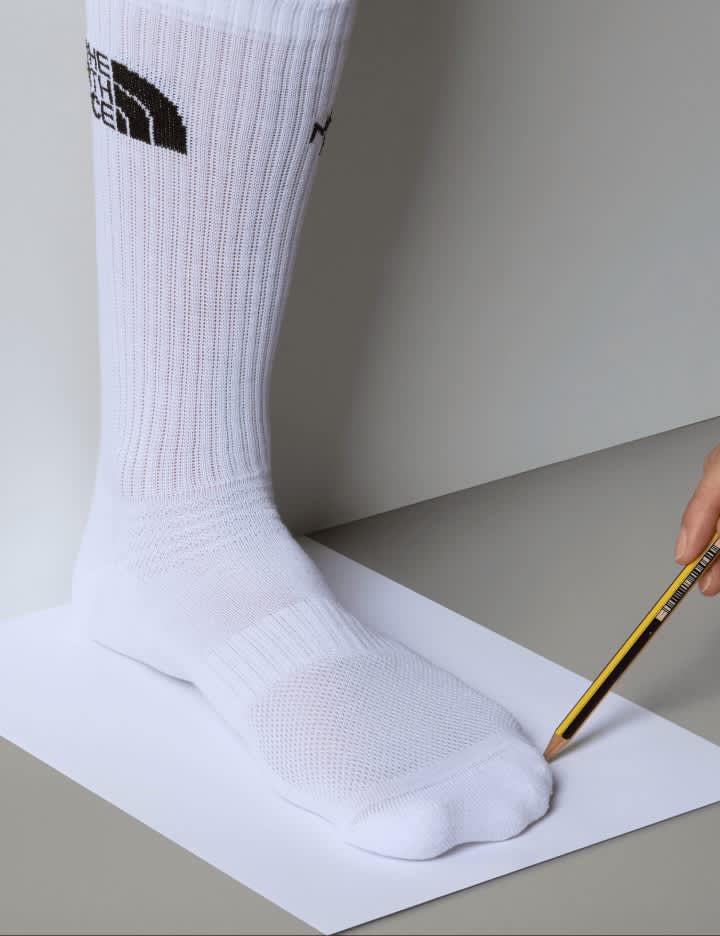
Ask someone to mark the tip of your longest toe and the back of your heel with a pen or pencil held downwards.
4
Step 4
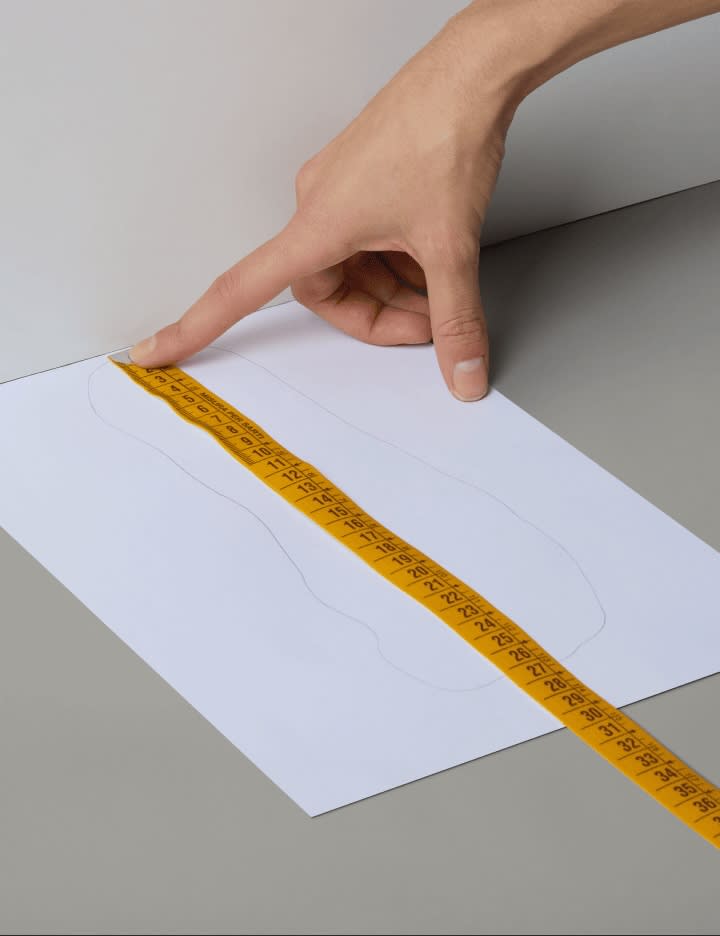
Step off the paper, then use a ruler or tape measure to find the distance between the two marks. This is your foot length.
5
Step 5
Repeat the same steps for your other foot. Don't worry if one foot is slightly longer – that's normal.
6
Step 6
Use the longer measurement to find your size on the size guide. If it falls between two sizes, we recommend choosing the larger size.
The measurements shown refer to foot length and not to the actual shoe dimensions.